
Sorry, no results.
Please try another keyword
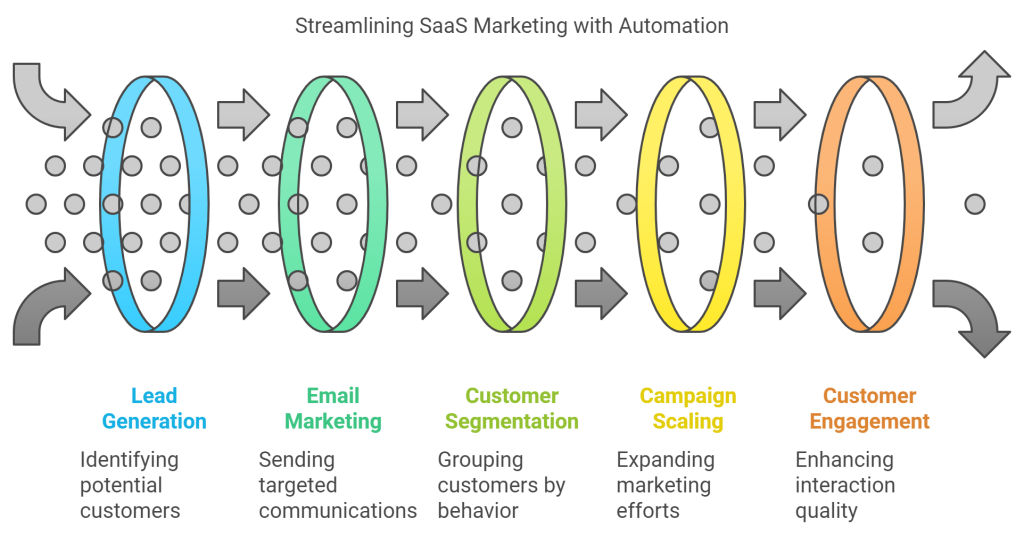
Marketing automation for SaaS involves leveraging software tools to automate repetitive tasks like lead generation, email marketing, and customer segmentation. It helps SaaS businesses streamline marketing efforts, save resources, and enhance ROI. In a competitive landscape, marketing automation enables companies to do more with less, maximizing impact while minimizing manual workload.
As the SaaS industry grows, the need for efficient marketing strategies has increased significantly. Marketing automation plays a crucial role in scaling campaigns, boosting customer engagement, and achieving competitive growth in the market. By automating mundane tasks, SaaS companies can focus on strategic initiatives that drive growth and innovation.
Whether automating customer onboarding or nurturing leads through the sales funnel, automation ensures that your marketing processes can grow alongside your business while maintaining a consistent customer experience.
Marketing automation provides numerous benefits for SaaS businesses, including time and resource optimization, enhanced customer experience, improved lead management, higher conversion rates, and better alignment between marketing and sales.
Automating repetitive marketing tasks allows teams to focus on high-level strategic initiatives like product development and customer relations. This ensures that limited resources are efficient and effective.
Marketing automation tools enable SaaS companies to create personalized campaigns, ensuring that leads and customers receive timely, relevant communication. Automated workflows guide leads through the sales funnel, improving customer satisfaction and resulting in higher conversion rates.
Automation helps align marketing and sales teams by creating streamlined lead handoff processes and nurturing protocols. This ensures that both teams work toward common goals and use consistent data to inform their actions.
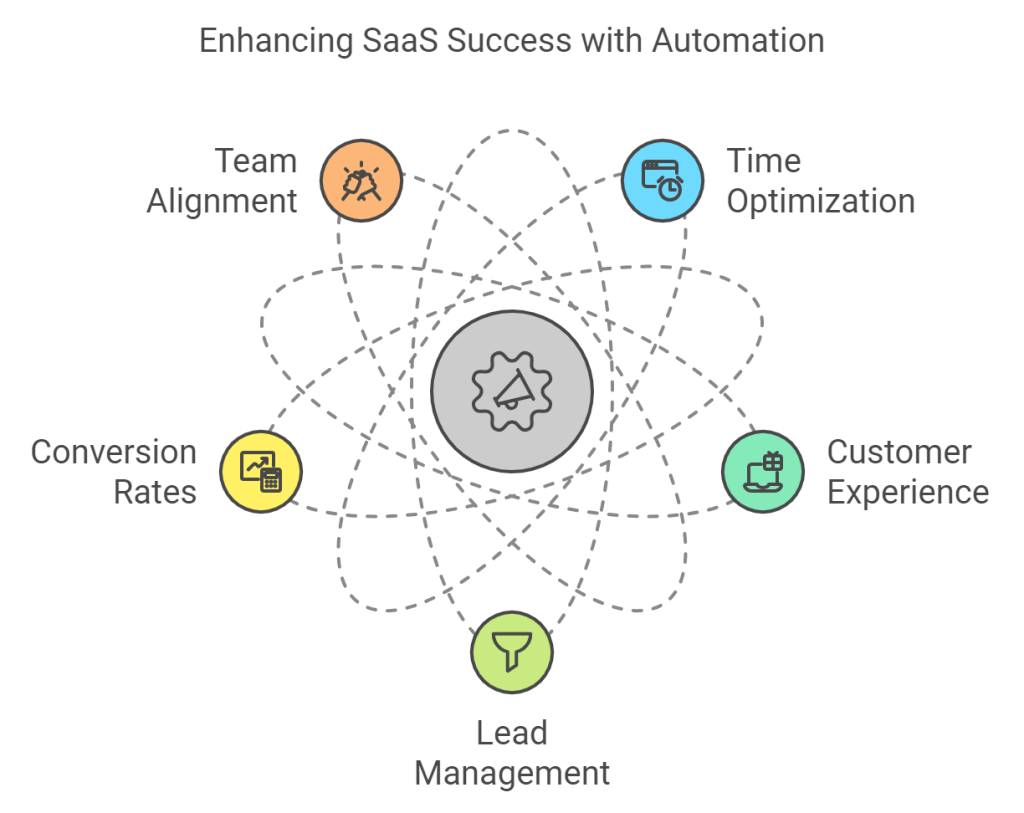
Effective marketing automation tools help manage the journey from lead capture to conversion and simplify multi-channel campaign execution. This ensures consistent outreach and maximizes conversion opportunities.
Automation allows for targeted communication through segmentation and personalized content, enabling higher engagement and interaction rates.
Marketing automation tools help visualize the entire customer journey and integrate seamlessly with CRM platforms, social media, and other essential tools. This ensures a cohesive customer experience and consistent data tracking.
Analytics and reporting features provide insights into campaign performance, ROI, and customer behavior. Accurate reporting helps identify which strategies are effective and informs continuous optimization.
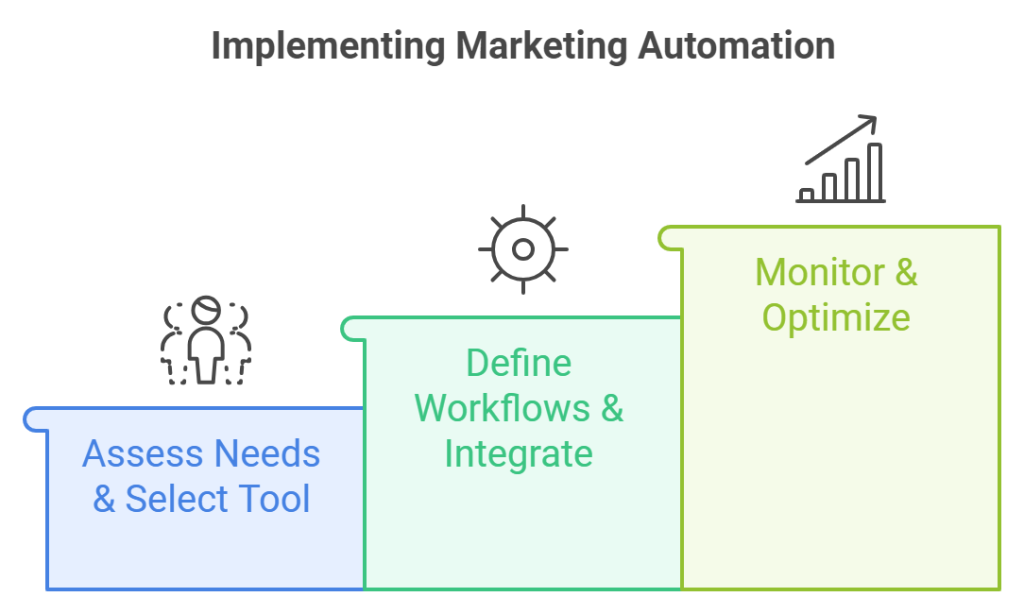
Assess your business needs to determine which marketing processes are inefficient and identify the goals you want to achieve with automation. Choose a platform that aligns with your business size, budget, and requirements, considering factors like scalability and integration.
Define automated workflows for lead nurturing, onboarding emails, and customer re-engagement campaigns. Integration with CRM, email platforms, and analytics tools is crucial to maintaining consistency and tracking performance effectively.
Continuous monitoring is essential to ensure workflows are performing as expected. Use analytics to track engagement, conversion rates, and campaign performance. Regularly refine workflows based on insights gathered to maximize effectiveness.
Automate email sequences like welcome emails, onboarding series, and re-engagement campaigns. This keeps leads engaged and pushes them further down the funnel, ensuring that your message reaches the right audience at the right time.
Integrate automation tools with your CRM to track customer interactions, understand their journey, and deliver personalized marketing content that aligns with their behavior. This integration is key to maintaining a seamless experience and increasing the chances of conversion.
Set up notifications for critical metrics and significant traffic changes. Analytics tools can provide data on the customer lifecycle, identify potential drop-off points, and help address issues proactively, ensuring that any red flags are tackled before they become significant problems.
Integrate all marketing channels to deliver a seamless experience across email, social media, and other platforms. Automated content should be consistent, relevant, and responsive across every customer interaction, enhancing the overall experience and brand perception.
Automating every aspect of marketing without oversight can lead to decreased relevance and customer frustration. It’s essential to conduct regular reviews and manual adjustments to keep content relevant and ensure that your automation remains effective.
Automated messages that become outdated or irrelevant risk turning off potential customers. To maintain engagement, it’s essential to continuously optimize and personalize content, ensuring it resonates with your audience.
Automated campaigns still require oversight. Without regular monitoring, performance may drop, impacting ROI and wasting resources. Periodic checks are necessary to keep automation strategies aligned with business goals and customer needs.
HubSpot is an all-in-one marketing platform that provides automation features for email, CRM integration, and customer segmentation—great for SaaS startups needing scalability.
Marketo offers powerful lead management and multi-channel marketing capabilities that are suitable for SaaS businesses looking for robust automation tools.
ActiveCampaign provides excellent email automation, customer journey mapping, and advanced segmentation, which is ideal for enhancing engagement.
Marketing automation has become an essential tool for scaling SaaS businesses efficiently. Implementing the right strategies can help you nurture leads, enhance customer experiences, and drive growth—all while optimizing resources. However, successful automation is about finding a balance between human insight and technology.
Joseph Studios is here to help SaaS startups looking to leverage marketing automation or any other digital marketing strategies. Our team understands the unique needs of SaaS businesses and provides tailored solutions to help you grow.
Ready to transform your marketing strategy? Get in touch with Joseph Studios today to schedule a discovery call and see how we can drive your success.

Sean Camilleri is a Digital Marketing & Growth Specialist at Joseph Studios, specializing in SEO, content marketing, and Pinterest strategy. With a background in FinTech risk management, he brings an analytical approach to organic growth — helping brands attract the right audience and turn targeted traffic into measurable results.

Our knowledgeable team is ready and eager to answer your questions. Want to learn more about our company and processes? Looking to explore our subscription services or discuss packaged pricing? Contact us or check out our pricing page to get acquainted.


