
7 Outreach-Sequence FAQs That Sales and Marketing Should Agree on Before Hitting Send

Sales and marketing teams share the same goal: to drive revenue. However, when it comes to executing outreach sequences, even small misalignments can unravel a campaign’s effectiveness. Poor handoffs, inconsistent messaging, unclear timing, and mismatched audience targets all create friction that not only slows conversions but also frustrates internal teams.
If you want your outreach strategy to perform well, your sales and marketing teams need to have the same playbook. That means asking the right outreach questions together before anything goes live.
In this blog, we’ll break down seven essential outreach questions every sales and marketing team should align on. Each one touches on a common friction point that, when addressed early, helps ensure your outreach sequences actually convert.
1. What qualifies a lead as “outreach ready,” and when should we hand them off?
The sales vs. marketing blame game usually starts here. Sales thinks leads aren’t ready. Marketing thinks sales didn’t follow up properly. The real issue? No one agreed on what a sales-ready lead looks like.
Only 25% of marketing-generated leads are qualified enough to pursue. Yet, many teams pass every lead through without a clear scoring system in place. That slows outreach, clogs the pipeline, and wastes everyone’s time.
To avoid this, sales and marketing need to agree on what a qualified lead actually looks like. That means working together to build a lead scoring system based on real behavior, like which actions show buying intent and which ones don’t. When both sides align on these criteria, handoffs get easier and outreach stays focused on leads that are ready for a real conversation.
2. Who owns the messaging, and how much should sales personalize it?
This is one of the most overlooked outreach questions, and one of the most critical for creating sequences that sound human and resonate.
Outreach sequences need to be consistent but not robotic. Sales wants flexibility. Marketing wants brand alignment. The answer lies in structure with freedom.
Marketing should provide foundational messaging, which includes core value props, pain points, and proof points tailored to personas. But they should also build in flexibility. That means creating templates with blanks that salespeople can fill in with specific customer context or language.
When both teams align on tone, structure, and boundaries, personalization adds value instead of introducing off-brand messages. The key is not to reintroduce your product in every email. Instead, introduce yourself and show that you understand the buyer’s specific challenge.
3. What’s the optimal cadence and timing for each email in our outreach sequence?
Cadence mismatch is a silent killer of good campaigns. Marketing may suggest 3–4 emails spaced days apart. Sales may want to follow up faster or slower based on lead behavior. Without a shared rhythm, follow-ups can feel off or overwhelming.
Cold outreach sequences work well with three touchpoints over a week:
- An intro on Day 1
- A nudge on Day 3
- A final email on Day 7
Follow-up sequences after a prior connection can be longer, spanning 10–14 days.
Still, timing shouldn’t be static. Teams should consider seasonality, deal cycles, and individual behaviors. For example, if a lead has high engagement, it may make sense to compress the sequence and strike while interest is high.
Asking outreach questions around timing, such as how soon is too soon and how late is too late, ensures that your message shows up when it’s most likely to be welcomed.
4. What success metrics should we use to evaluate outreach effectiveness?
This is where alignment either thrives or falls apart. If marketing is measuring open rates and sales is focused on closed deals, then no one knows if the outreach is actually working.
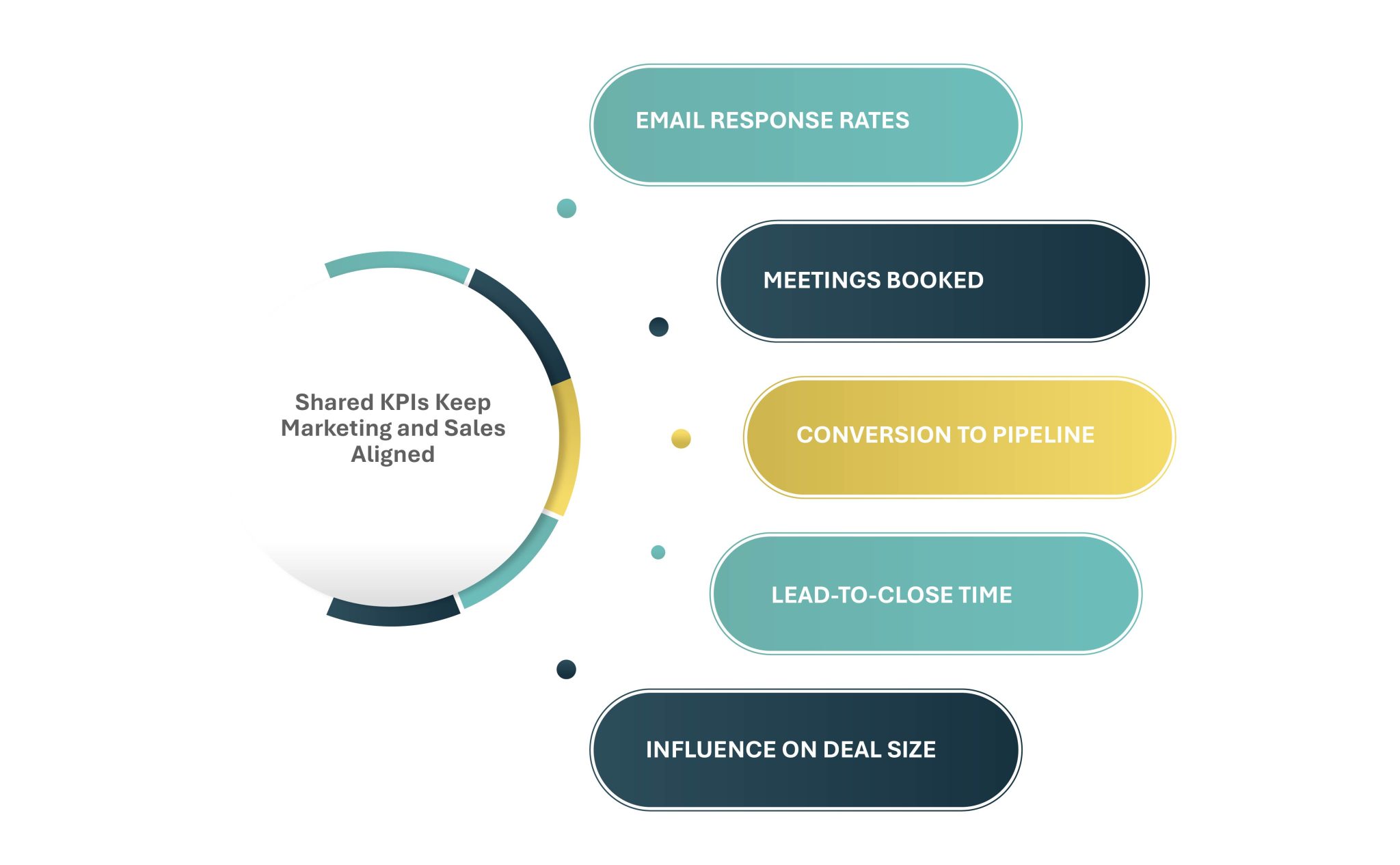
Instead, both teams need to agree on shared KPIs. These might include:
- Email response rates
- Meetings booked
- Conversion to pipeline
- Lead-to-close time
- Influence on deal size
It’s important to track both micro and macro-outcomes. Opens and clicks give directional signals, but booked calls and deals show true impact.
The most effective teams use one shared dashboard, a single source of truth. Without shared metrics, your outreach questions can lead to finger-pointing instead of insight.
5. How will we gather and apply sales feedback to improve outreach content?
Marketing creates the content. Sales talks to real prospects. Bridging that gap is essential.
According to research, 65% of sales reps say they struggle to find content relevant to their conversations. Worse, 60–70% of B2B content created by marketing is never used. That’s a huge waste of time and resources.
Sales should share what messaging works in real conversations. Marketing should listen, adjust copy, and build better templates based on that feedback. Setting up regular feedback loops, such as biweekly syncs or shared comment documents, can help both teams refine sequences together.
One of the smartest outreach questions to ask here: “What’s one line in our emails you regularly delete or rewrite?” The answers can be surprisingly helpful.
6. Which channels and formats should we use at different stages of the outreach?
Email is just the beginning. As inboxes get more crowded, outreach teams turn to voice memos, personalized videos, and LinkedIn messages to break through. But using them effectively means coordinating when and why each one is deployed.
Cold leads might need a short email plus a LinkedIn touch. Warm leads might respond better to a direct video follow-up. Hot leads could get a phone call within hours of showing high intent signals.
Using a mix of channels can boost reply rates and reduce the number of touches needed per conversion.
Ask this: Are we aligned on which channels fit each lead stage, and do we have the tools to execute across them? If not, you’re missing a major opportunity to evolve your outreach.
7. How do we agree on audience segments, priorities, and account targets?
This is one of the most foundational outreach questions, and one that shapes every campaign that follows.
Misalignment at the top of the funnel leads to everything else falling apart. If sales is prioritizing existing accounts while marketing is sending sequences to net-new leads, the result is confusion and dropped deals.
A lack of shared segmentation leads to wasted content. Sales often discovers new verticals or personas that marketing overlooks. Marketing, meanwhile, may over-prioritize quantity over relevance.
To stay aligned, both teams should co-build the Ideal Customer Profile (ICP) and Target Account List (TAL). Regularly revisit it together. Add new insights. Remove underperforming segments. Agree on which audiences should receive what type of outreach and when.
Build Smarter Outreach by Getting in Sync First
Before launching any outreach campaign, alignment is the foundation. The best campaigns come from teams that have answered the tough outreach questions together:
- What defines a qualified lead?
- Who owns the message?
- How do we measure success?
At JOS, we help brands craft outreach strategies that build real relationships. Our organic approach combines intelligent segmentation, human-first messaging, and thoughtful collaboration between marketing and sales.
Let’s work together to make sure your next sequence is your most successful one yet. Reach out to our team, and let’s align your outreach strategy from the first send.

Maja has spent nearly a decade helping brands build authority, drive leads, and grow without relying on paid ads. With expertise in growth marketing, Generative Engine Optimization, technical SEO, and content-led growth, she turns smart content strategy into measurable business results.


