
Psychographics Still Matter Even if Everyone Pretends They Don’t
The Forgotten Lever in Modern Marketing
Dashboards have taken over boardrooms. Teams gather around click-through rates, cost per lead, and the latest AI-driven automation; these are the only numbers that matter. Somewhere in the process, one of the most powerful tools in marketing—psychographics—was quietly left behind. Not because it lost value, but because it’s harder to quantify on a spreadsheet. Yet anyone with experience knows the truth: numbers alone never explain behavior. They never did.
Why Psychographics Go Deeper Than Demographics
Demographics are surface-level. They tell you the basics: age, income, gender, and location. That’s helpful, but it only provides a sketch of your audience. Psychographics dig into the “why”—the motivations, values, and beliefs that drive real decisions.
Think about it this way: two 35-year-old professionals can live in the same neighborhood, earn the same salary, and have similar family setups. On paper, they look identical. But one craves security and tradition, while the other is fueled by adventure and change. If your message speaks only to their surface profile, you’ll connect with neither.
Psychographics give campaigns resonance. They allow a brand’s voice to reach beyond the inbox or feed and connect with the deeper identity of the person on the other side.
The Shift Away From Understanding the Why
So why did psychographics lose the spotlight? The rise of automation and data-driven marketing made it feel unnecessary. Algorithms promised precision, big data claimed to “know us better than we know ourselves,” and marketers leaned into efficiency. The result? Endless campaigns built on lookalike audiences and demographic filters.
The problem with this approach is sameness. Feeds today are flooded with ads that all blur together, each one efficient but none memorable. Without the depth of psychographic insight, brands sound identical. And when everyone sounds the same, no one stands out.
What Data Misses When It Ignores Human Motivation
Campaigns optimized only for clicks often forget what makes people care in the first place. Metrics tell you what happened, but not why it happened. A spike in conversions might look like success, but without psychographic context, you don’t know if it was driven by fear, aspiration, or even coincidence. That gap is where many strategies fall apart.
The truth is simple: algorithms can analyze patterns, but they cannot feel intent. They can segment by income or job title, but they cannot explain why someone chooses a brand because it aligns with their values or worldview. That’s the difference between surface engagement and lasting loyalty.
How to Reintroduce Psychographics Into Modern Marketing
Bringing psychographics back doesn’t mean abandoning the tools that make campaigns efficient. It means layering depth on top of data. Here are steps that sharpen both strategy and execution:
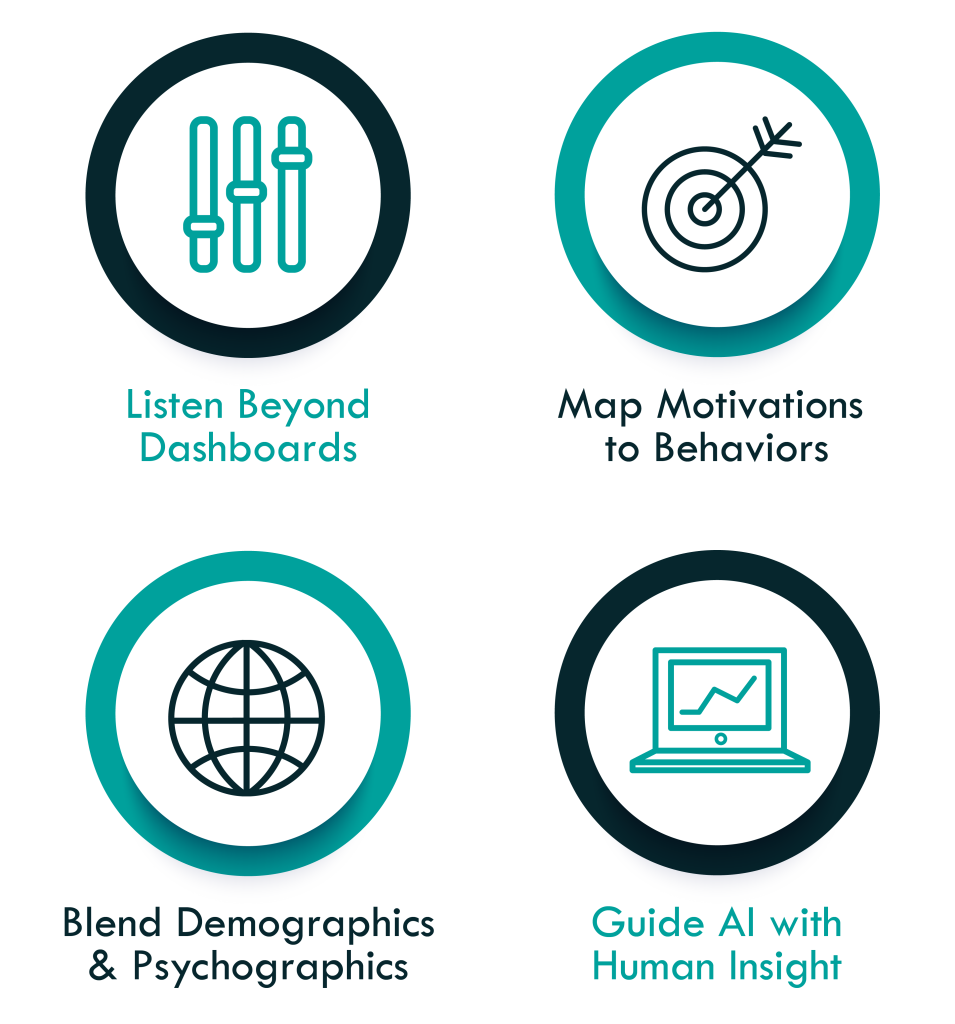
- Listen beyond the dashboards. Customer interviews, forums, and social communities reveal motivations numbers can’t. Real words from real people are the strongest source of insight.
- Map motivations to behaviors. Identify what your audience wants to achieve, what they fear losing, and how they define success. These drivers turn generic messaging into something meaningful.
- Blend with demographics. Demographics ensure reach, psychographics ensure relevance. Together, they produce strategies that scale without losing nuance.
- Guide AI with human insight. Left unchecked, AI will chase the easiest click. When directed by psychographic understanding, it can scale campaigns that feel personal, not robotic.
These steps shift campaigns from transactional to relational. The focus moves from “who can I reach?” to “why will this matter to them?”—and that shift creates stronger connections.
The Future Belongs to Brands That Understand the Why
The next wave of marketing will not be won by whoever has the biggest ad spend or the most advanced automation. It will be won by those who remember that people buy with both logic and emotion. Psychographics provide the blueprint for the emotional side of the equation.
When brands reconnect with the underlying purpose behind their decisions, they stop sounding like everyone else. They build messaging that cuts through the noise and earns attention for the right reasons. In an environment where sameness dominates, that differentiation is the edge.
Psychographics are not old-fashioned. They are timeless. They remain the difference between campaigns that disappear in a feed and campaigns that spark recognition, trust, and loyalty. Those who bring them back into strategy can be confident that they are shaping the brands that last.
At JOS Marketing, we’ve seen firsthand how revisiting the “why” transforms results. The numbers still matter—but when combined with human motivation, they tell a story that algorithms alone never could.

Sean Camilleri is a Digital Marketing & Growth Specialist at Joseph Studios, specializing in SEO, content marketing, and Pinterest strategy. With a background in FinTech risk management, he brings an analytical approach to organic growth — helping brands attract the right audience and turn targeted traffic into measurable results.


