
SEO for SaaS: How to Drive Organic Traffic and Convert Leads

What is SaaS SEO?
SEO for SaaS—Software as a Service—entails a strategic approach to optimizing a company’s website to boost visibility in search engine results pages (SERPs). The goal?
To draw more organic traffic and establish your site as an authority in its niche. This process involves enhancing rankings for pertinent keywords, making it easier for potential customers to discover your services.
By targeting specific search terms, topics, and queries related to your product, SaaS SEO helps capture the attention of your ideal audience. It encompasses various facets, including on-page SEO, off-page SEO, and technical SEO. Together, these elements propel your website to the top of Google’s search results, serving as a powerful tool in your inbound marketing arsenal.
Why Invest in SEO for Your SaaS Business?
The importance of SEO for SaaS companies cannot be overstated. While you might initially feel underwhelmed by the immediate impacts of SEO, its benefits are cumulative and grow exponentially over time—much like the strategies employed by SaaS giants like HubSpot and Mailchimp.
- Compounding Effects Over Time SaaS SEO isn’t just about short-term gains; its impact multiplies as you continue to produce and refine your content. This enduring strategy ensures that your initial efforts pay off more significantly as time passes, providing sustained visibility and engagement.
- Synergy with Other Marketing Channels SEO is not an island. In today’s digital landscape, integrating multiple marketing channels is crucial. The content crafted for SEO can be leveraged across email campaigns, social media, and more.
- Reduced Cost Per Acquisition (CPA) In contrast to cost-intensive channels like pay-per-click (PPC) advertising or paid social media, SEO offers a more budget-friendly alternative that can significantly lower your CPA. By investing in SEO, SaaS companies can achieve better results at a fraction of the cost.
How Google Works: The Basics of SEO for SaaS
Navigating Google’s search mechanics can often seem like deciphering a complex code, especially for SaaS businesses striving to enhance their online presence. Understanding how Google discovers, processes, and lists your website can transform your SEO strategy.
Let’s demystify this process into three straightforward steps that every SaaS marketer should grasp: Crawling, Indexing, and Delivering Search Results.
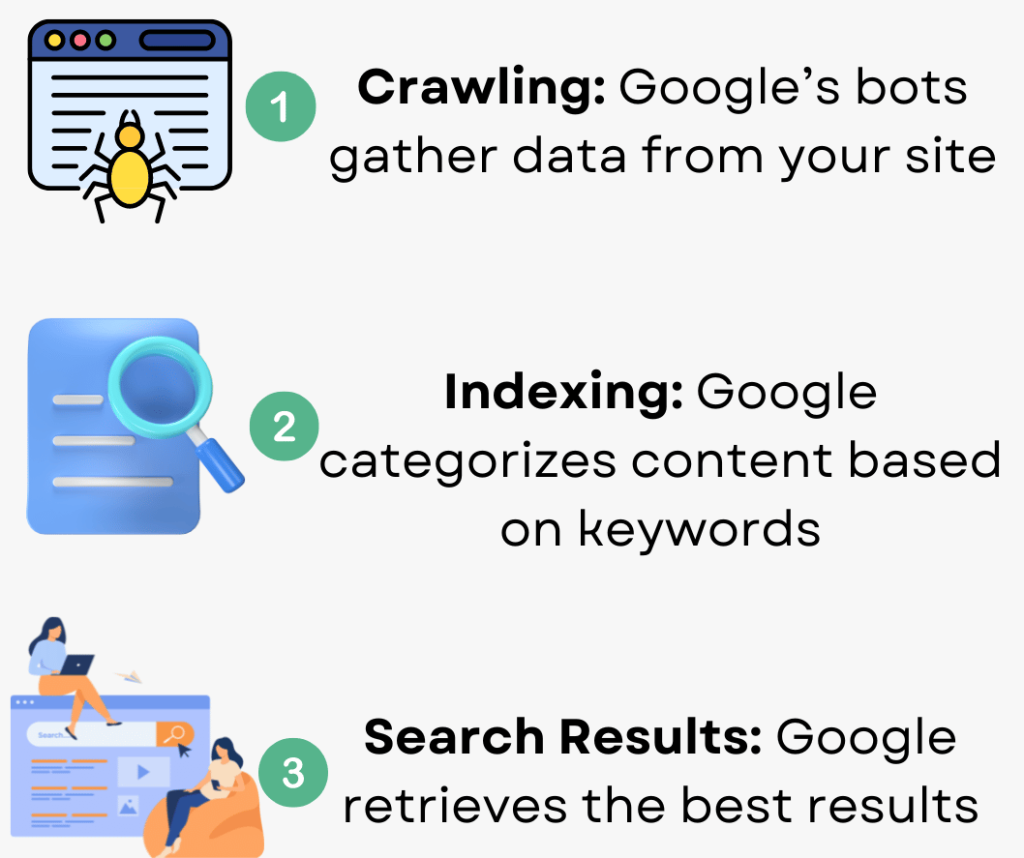
1. Crawling: The Exploration Stage
Google begins its search process with crawling, where it deploys automated robots—commonly known as spiders or crawlers—to scour the Internet. These crawlers navigate from one link to another and from one page to another, gathering data from billions of web pages.
They meticulously download this data and forward it to Google’s massive database, known as the index. For a SaaS company, ensuring that your site is crawlable is crucial. This means having a clean, well-structured website with easy-to-follow links and no dead ends for crawlers.
2. Indexing: The Organization Phase
Once your content is crawled, it moves to the indexing stage. Here, Google analyzes the content to understand and categorize what each page is about. This analysis includes assessing keywords, understanding the context through meta tags, and other signals that influence the page’s placement in search results. Leveraging the correct industry-specific keywords, optimizing meta tags, and ensuring high-quality content on all pages can significantly boost your indexing effectiveness.
3. Delivering Search Results: The Retrieval
The final leg of the journey is how Google responds to user queries. This process involves fetching the most relevant pages from its index based on the query’s keywords and displaying them in the Search Engine Results Pages (SERPs).
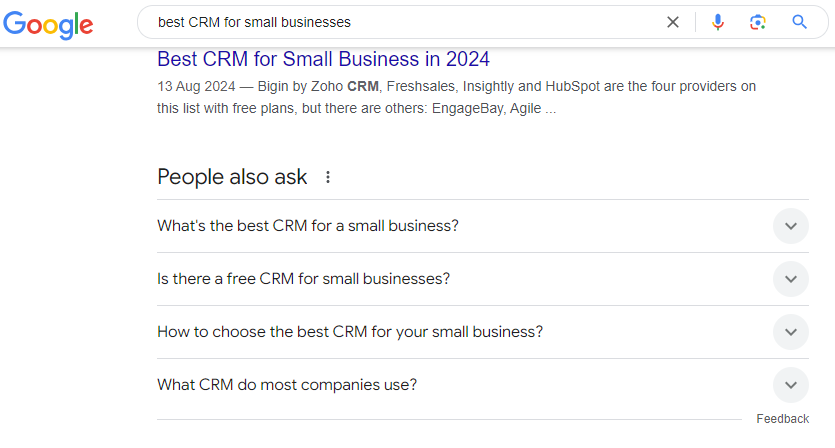
SERPs can feature a mix of organic search results, paid advertisements, and rich snippets like knowledge panels and ‘People Also Ask’ boxes. For a SaaS business, aiming to rank in these varied result types involves optimizing content for both direct answers and broader topics and questions your potential users might have.
Effective Keyword Strategies to Elevate SaaS SEO
SEO for SaaS companies is a specialized field that requires a deep understanding of the nuances of digital marketing tailored to software services. Here, we’ll break down the key elements that make up effective SEO strategies for SaaS businesses, beginning with the foundation of all SEO efforts—keyword research.
Finding the Right Keywords
Before diving into keywords, you must understand who your customers are. Creating detailed customer personas involves analyzing demographic data, interests, pain points, and behaviors. This allows you to tailor your keyword strategy to your customers’ intent.
Once personas are defined, pinpoint the challenges they face that your SaaS solution addresses. For example, if you’re a CRM software provider, your potential customers might search for “efficient customer relationship management” or “best CRM for small businesses.”
Start with broad ‘seed’ keywords that relate directly to your core offerings, like “CRM software,” and expand to more specific terms based on your audience’s needs and the problems you solve. Use tools like SEMrush, Ahrefs, or Moz to build out your keyword lists, ensuring your landing pages are optimized for the most effective keywords.
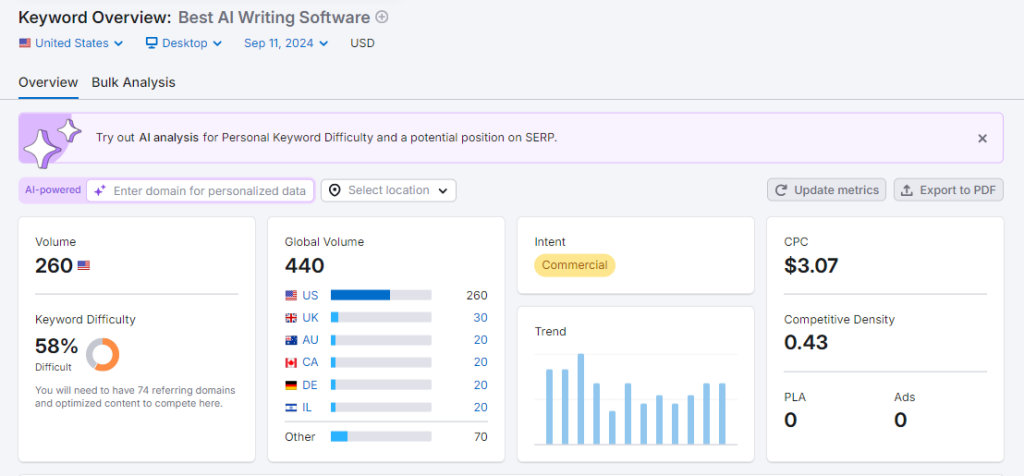
Metrics to Evaluate Keywords
- Search Volume: Indicates the popularity of a keyword and potential traffic.
- Keyword Difficulty: Provides insight into how hard it will be to rank for a keyword.
- Organic CTR: Estimates the click-through rate from the search results.
- Traffic Potential: Considers the long-term value and relevance of a keyword.
- Cost Per Click (CPC): Helps assess the commercial intent behind a keyword, indicating potential profitability.
On-Page SEO for SaaS Companies
On-page SEO is a critical component of your overall SEO strategy. It optimizes elements within your website to improve rankings and attract relevant traffic.
Essential On-Page SEO Techniques
1. Content Optimization
Optimizing your content begins with understanding how Google and other search engines evaluate your site in relation to user queries.
- Title Tags: Your title should ideally integrate the primary keyword at the beginning, as it helps signal the main subject to search engines quickly.
- Meta Descriptions: Though not a ranking factor, a well-crafted meta description can improve the click-through rate (CTR) by giving searchers a concise summary of what to expect on the page.
- Headings and Content: Use headings to structure your content logically, incorporating various keyword variations to enhance visibility without keyword stuffing. It’s essential to balance keyword usage so that it feels natural within the context of the content.
2. URL Optimization
Create clean, descriptive URLs that incorporate your primary keywords. Avoid complex URLs filled with unnecessary parameters, as they can confuse users and search engines alike.
Example: Instead of https://example.com/pgid=12345, use https://example.com/project-management-tools.
3. Image Optimization
Images can significantly impact page load times and user engagement. Optimizing them includes:
- Descriptive Filenames: Name your images descriptively and include relevant keywords where appropriate.
- Alt Text: Provide alternative text for images using keywords that reflect the image content. This not only helps with SEO but also improves accessibility.
- Compression: Reduce file sizes to speed up page loading without compromising quality. Tools like TinyJPG and TinyPNG are excellent for this purpose.
4. Internal and External Linking
Links are the pathways that connect your content and guide both users and search engines:
- Internal Links: Linking-related content within your site creates a logical structure and link hierarchy, which helps distribute page authority and ranking power.
- External Links: Linking to reputable and relevant external sites can provide additional value to your users and help search engines better understand your page’s context.
5. Avoiding Common Pitfalls
When optimizing your content, be wary of common SEO traps that can hinder your progress. Keyword stuffing is a particularly egregious mistake, where keywords are overused to the point of reducing content quality and readability. This tactic can lead to penalties from search engines, ultimately harming your site’s ranking rather than helping it. Prioritize informative, user-focused content that naturally incorporates keywords.
Another pitfall to avoid is keyword cannibalization, which occurs when multiple pages on your site target the same keyword. This can lead to your pages competing against each other in search engine rankings, diluting the effectiveness of your overall efforts. Strategically plan your page topics to ensure that each targets unique keywords, allowing each page to perform optimally without internal competition.
Advanced On-Page SEO Strategies
Optimizing for Featured Snippets
Aiming for featured snippets can dramatically increase your visibility on search engine results pages. You can identify opportunities for featured snippets by analyzing the type of content that typically earns this spot for your target keywords, such as definitions, lists, or step-by-step guides.

Schema Markup
For a SaaS company, schema markup can significantly enhance visibility and click-through rates on search engine results pages (SERPs). For example, if you offer a project management tool, you could use schema to display features like pricing plans, user ratings, or even upcoming webinar dates directly in the search results.
This added layer of information makes your listing more attractive and provides potential customers with immediate value, increasing the likelihood they’ll click through to your site.
Enhancing Topical Authority
Develop comprehensive content that covers related subtopics within your main subject area to establish your site as an authoritative source. Tools to analyze keyword density, such as TF-IDF, can help you understand how your content compares to top-ranking competitors and adjust your strategy accordingly.
Utilizing ‘People Also Ask’ and Related Searches
When crafting content, it’s beneficial to look at Google’s “People Also Ask” section for inspiration. This section provides a goldmine of related questions. By incorporating answers to these questions directly within your post, you provide more value to your readers and increase the chances of your content appearing for related queries.
Content Marketing Strategy for SaaS Companies
As the SaaS landscape expands, a robust content marketing strategy becomes paramount. Content is not just a way to engage potential customers; it’s a critical tool for outshining competitors and positioning your brand as a leader in your niche.
Why Content Marketing is Essential for SaaS
Building Brand Authority
Content marketing for SaaS isn’t just about filling your blog with articles; it’s about creating high-value resources that establish your brand’s authority and expertise. This involves crafting content that addresses the specific needs and pain points of your target audience, thereby fostering trust and credibility.
Driving Organic Growth
A well-executed content strategy leverages SEO to improve search rankings and attract more organic traffic. This traffic is not only cost-effective but also tends to have higher engagement and conversion rates because it’s driven by genuine search interest.
Developing a Winning SaaS Content Strategy
1. Comprehensive Market Research
Start with in-depth research to deeply understand your target audience. What are their biggest challenges? What solutions are they searching for? This will guide your content creation, ensuring it resonates and provides value.
Example: If your SaaS product offers project management solutions, your content should address common project management challenges, such as team collaboration, time tracking, or resource allocation.
2. Keyword Integration
Integrate SEO by identifying keywords that align with user intent and your business goals. This includes not only high-traffic keywords but also long-tail phrases that capture a more targeted audience.
3. Content Formats and Distribution
Diversify your content formats to include blogs, whitepapers, e-books, infographics, and videos. Each format serves different purposes and caters to different preferences within your audience.
- Blogs and Articles: Great for addressing specific questions and improving SEO.
- E-books and Whitepapers: Ideal for in-depth exploration of topics, often used in lead generation.
- Infographics and Videos: Effective for visual storytelling and can increase engagement on your site and social media channels.
4. Promotion Across Multiple Channels
Adopting a multi-channel promotional strategy is essential to maximizing the reach and impact of your content. Start by leveraging the power of social media to share engaging snippets from your articles, driving traffic back to your full articles or landing pages.
Additionally, use email marketing to keep your subscribers informed and engaged by sending newsletters that highlight your most recent posts or offer exclusive content. This adds value and keeps your audience connected to your brand.
Lastly, consider using paid advertising to promote your top-performing content or introduce new products to a broader audience. Targeted advertising campaigns can enhance visibility and foster greater reach, ensuring your content lands in front of the right eyes at the right time.
5. Measurement and Optimization
Continuously track the performance of your content. Use tools like Google Analytics to monitor traffic, engagement, and conversion rates. Adjust your strategy based on this data to optimize the effectiveness of future content.
Execution and Examples
Creating Pillar Content
Develop comprehensive pillar pages that serve as the cornerstone for your content strategy. These pages should cover all aspects of a particular topic, linking to more detailed cluster content that addresses specific subtopics.
Example: For a SaaS company specializing in AI writing tools, a pillar page could be titled “The Complete Guide to AI Writing Software,” with cluster content such as “Enhancing Content Creation with AI,” “AI and SEO Content Optimization,” and “Using AI to Streamline Blog Writing.”
These cluster topics delve into specific uses and benefits of AI writing tools, providing a comprehensive resource that addresses various aspects and applications of AI in the content creation process.
Utilizing the Skyscraper Technique
Identify existing content within your niche that is performing well. Create something better—more thorough, up-to-date, visually appealing—and then reach out to the same backlink sources to drive links to your content instead.
Leveraging Expert Insights
Generate content that includes expert insights, whether through interviews, guest posts, or expert roundups. This enhances the content’s credibility and expands its reach through the experts’ networks.
Link Building in SaaS
Navigating the landscape of SEO requires more than just on-page tactics for SaaS companies—it demands a robust link-building strategy that enhances both visibility and authority.
Link building extends beyond mere SEO; it is a cornerstone for establishing your brand’s trust and credibility in the digital realm. Every high-quality link is an endorsement, boosting your site’s authority and improving your search engine rankings.
Proven Link Building Techniques for SaaS
1. Leverage High-Value Content
To build a solid backlink profile, focus on creating content that naturally draws links. One approach is to create in-depth guides that cover every aspect of a specific topic, making your site a go-to resource. Another effective strategy is to offer original research and data, providing unique insights and statistics that others will reference, bringing organic links back to your content.
2. Guest Blogging
Guest blogging remains a highly effective strategy to gain backlinks. By contributing well-crafted, valuable articles to respected blogs within your niche, you not only secure backlinks but also establish yourself as a thought leader. This method works well for building your brand’s authority and driving traffic back to your website.
3. Broken Link Building
Another link-building tactic is to identify broken links on relevant sites within your industry and offer your high-quality content as a replacement. This method benefits webmasters by helping them maintain working links, while you earn backlinks in the process.
Integrating PR with Link Building
Effective PR strategies can dramatically boost your link building efforts. Here’s how:
- Media Outreach: Build relationships with journalists and industry influencers who can share your content through their networks.
- Press Releases: Generate buzz around new products or major updates with press releases that can lead to backlinks from news outlets.
- Event Sponsorship: Sponsoring industry events often includes a backlink on event websites, which can be highly authoritative.
Measuring Success in Link Building
Track and measure the impact of your link building strategies to understand their efficacy.
- Backlink Tools: Utilize tools like Ahrefs to track your backlinks and observe how they affect your site’s authority.
- Analytics: Monitor referral traffic from backlinks via Google Analytics to gauge their quality and relevance.
- SEO Performance: Watch for improvements in your rankings and organic traffic as indicators of successful link building.
Working with SaaS SEO Experts
When considering outsourcing your SEO needs, it’s pivotal to tailor your approach based on your company’s current standing and available marketing budget. Whether you have an internal team in place or you’re exploring external expertise, understanding the unique needs of your SaaS business can make all the difference.
For those who aren’t ready to onboard a full-time SEO specialist but have a marketing team, collaborating with an experienced SEO consultant can provide valuable strategic direction. This allows your internal team to execute under expert guidance, ensuring your SEO efforts are aligned with best practices and the latest industry insights.
If your needs extend beyond strategic direction to include comprehensive SEO services, partnering with a reputable SaaS SEO agency might be your best bet. Although more costly than hiring a consultant, an agency offers a full-service approach to handle all aspects of SEO—from technical adjustments to content creation and link building.
Selecting the Right Partner
Not all SEO consultants and agencies are created equal. To avoid pitfalls and ensure you partner with a true expert, consider these factors:
- Credibility and Proof of Success: Look for consultants or agencies with genuine reviews, compelling case studies, and a transparent track record of success.
- Industry Presence: Ensure the consultant or agency has a strong reputation within the SEO community. A recognizable face behind the brand often indicates trust and reliability.
- Specialization: Preferably, choose a partner that specializes in SaaS. Those who focus exclusively on SaaS businesses are likely more attuned to the specific challenges and opportunities your business faces.
- Dedicated Attention: Consider the structure of the agency’s team. It’s beneficial to know whether you’ll have a dedicated account manager who handles a few accounts or one spread thin over many.
Cost Considerations
The investment for top-tier SEO expertise varies:
- Consultants typically charge between $200 and $350+ per hour.
- Agencies may range from $5,000 to $20,000+ per month, depending on the breadth and depth of services provided.
As with most professional services, you often get what you pay for with SEO consulting and agency partnerships. Investing in the right expertise can dramatically enhance your visibility and growth.
Mastering SEO for SaaS: A Strategy That’s Worth the Investment
SEO for SaaS companies involves a multitude of strategies and tactics, from perfecting on-page elements to building authoritative backlinks. It can feel overwhelming, but with the right approach, the effort is well worth it. The rewards of higher rankings, increased organic traffic, and more qualified leads can significantly impact your growth in a competitive landscape.
While SEO is a time-consuming process, the long-term benefits far outweigh the effort. For companies that don’t have a dedicated team or the bandwidth to pursue these strategies on their own, partnering with experts like Joseph Studios can make all the difference. They will work to craft a tailored SEO strategy, including content creation, that improves your organic reach and helps your SaaS brand stand out.
Investing in a solid SEO foundation today will set you up for sustainable growth tomorrow. It’s not just about driving traffic—it’s about building a lasting, authoritative presence in your industry.

Sean Camilleri is a Digital Marketing & Growth Specialist at Joseph Studios, specializing in SEO, content marketing, and Pinterest strategy. With a background in FinTech risk management, he brings an analytical approach to organic growth — helping brands attract the right audience and turn targeted traffic into measurable results.


