
Revolutionize Your SaaS Business with Effective Marketing

In today’s digital age, the software-as-a-service (SaaS) model has revolutionized the way businesses operate. SaaS marketing is a specialized field focused on promoting and generating leads for these cloud-based software solutions. With its unique challenges and sales funnels, SaaS marketing requires a strategic approach to drive growth and customer acquisition.
Understanding the SaaS Landscape
The SaaS landscape is continually evolving, presenting both hurdles and opportunities for businesses. To navigate this complex environment, it’s essential to understand the unique characteristics of SaaS and the factors that influence its marketing strategies. Most prominently, SaaS businesses rely on recurring revenue from monthly or annual subscriptions, making retention a central consideration.
There are also other key factors at play. SaaS software is accessed remotely through the internet, eliminating the need for on-premise installations. This also means that SaaS providers can quickly release updates and new features, staying ahead of the competition. Perhaps best of all, these solutions can easily scale to accommodate growing user bases and increasing demands.
Challenges in SaaS Marketing
Because many SaaS products are B2B-focused, sales cycles are often longer than traditional product sales, as decision-makers may need to evaluate multiple options and secure budget approval. And unlike physical products, SaaS solutions cannot be physically touched or experienced, so marketers must effectively communicate the benefits and value proposition through compelling messaging and demonstrations.
In SaaS, retaining existing customers is crucial for long-term success, and high churn rates can significantly impact revenue. Finally, the SaaS market is highly competitive, with numerous players offering similar solutions. Differentiating a product and building a strong brand identity is essential.
Opportunities in SaaS Marketing
While challenges abound, SaaS marketing does have some inherent advantages. Compared to other sectors, SaaS companies can often leverage more detailed data analytics to gain valuable insights into customer behavior, preferences, and pain points. This data can be used to personalize marketing messages and improve customer experiences.
Cloud-based delivery also allows SaaS companies to reach a global audience without geographical limitations. Furthermore, by empowering users to drive growth, SaaS companies can accelerate adoption and reduce reliance on traditional sales and marketing efforts. Providing excellent customer support and addressing customer needs positions SaaS companies to foster loyalty and advocacy.
Core Strategies for SaaS Marketing Success
Content Marketing
By producing valuable content like blog posts, whitepapers, and case studies, SaaS companies can attract and engage their target audience. Optimizing this content for search engines ensures that it appears in relevant search results, driving organic traffic to the website. To support these efforts, a well-planned content calendar helps maintain consistency and ensures that content is published regularly.
Social Media Marketing
When it comes to social media, location is everything: Understanding the target audience’s preferences and behaviors is vital for selecting the right platforms. There, sharing informative posts, industry news, and behind-the-scenes glimpses can help build a strong social media presence. Engaging with followers, responding to comments, and participating in relevant discussions fosters a loyal community.
Email Marketing
Email is a natural fit with SaaS marketing, especially when properly managed. Segmenting email lists and tailoring content to specific needs can improve engagement and conversion rates. Automating email workflows, such as welcome emails, abandoned cart reminders, and follow-up sequences, saves time and increases efficiency. For continued growth, tracking metrics like open rates, click-through rates, and conversion rates helps optimize future campaigns.
Paid Advertising
Paid advertising allows SaaS companies to reach a wider audience and drive targeted traffic to their websites. Eye-catching ad creatives and persuasive copy can capture the attention of potential customers, while regularly monitoring ad performance and making data-driven adjustments can improve ROI.
Product-Led Growth
By providing a seamless user experience and offering free trials or freemium models, SaaS companies can encourage users to explore the product and become advocates. Offering a free version of the product or a limited-time trial can help generate leads and build brand awareness. Additionally, a smooth onboarding process can significantly impact user retention and satisfaction.
Key Metrics to Track for SaaS Success
Tracking the right metrics is crucial for understanding the performance of a SaaS business and making data-driven decisions. Here are some key metrics to monitor.
Customer Acquisition Cost (CAC)
Customer acquisition cost measures the cost of acquiring a new customer. By tracking CAC, businesses can evaluate the effectiveness of their marketing efforts and identify areas for improvement. The formula for tracking CAC is dividing the cost of sales and marketing by the number of new customers acquired.
CAC = Cost of Sales and Marketing / Number of New Customers Acquired

Customer Lifetime Value (CLTV)
CLTV represents the total revenue a customer generates over their lifetime. A high CLTV indicates a strong customer base and recurring revenue. The formula here is to multiply the average revenue per user by the customer lifetime value.
CLTV = Average Revenue Per User (ARPU) * Customer Lifetime
Churn Rate
The churn rate measures the percentage of customers who cancel their subscriptions within a specific period. It’s a critical metric for assessing customer satisfaction and retention, and the formula here is dividing the number of customers lost by the total number of customers at the start of the period.
Churn Rate = Number of Customers Lost / Total Number of Customers at the Start of the Period

Monthly Recurring Revenue (MRR)
MRR is the total recurring revenue generated each month. It’s a key indicator of a SaaS business’s financial health and growth potential. For MRR, the formula is multiplying the average revenue per user with the total number of paying customers.
MRR = Average Revenue Per User (ARPU) * Total Number of Paying Customers
Net Revenue Retention (NRR)
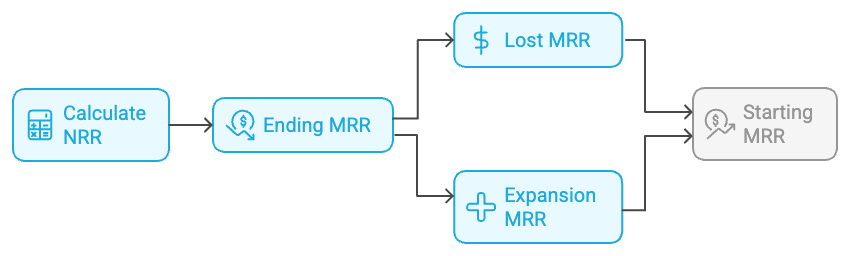
NRR measures the revenue retained from existing customers. It takes into account expansion revenue (upselling and cross-selling) and contraction revenue (downgrades and cancellations). For net revenue retention, you subtract the ending MRR from the total of the lost MRR number and the expansion MRR number and then divide by the starting MRR number.
NRR = (Ending MRR – Lost MRR + Expansion MRR) / Starting MRR
Customer Satisfaction (CSAT)
CSAT measures how satisfied customers are with the product or service. It’s often measured through surveys or feedback forms, and the formula divides the number of satisfied customers by the total number of surveyed customers.
CSAT = Number of Satisfied Customers / Total Number of Surveyed Customers

Product Qualified Leads (PQLs)
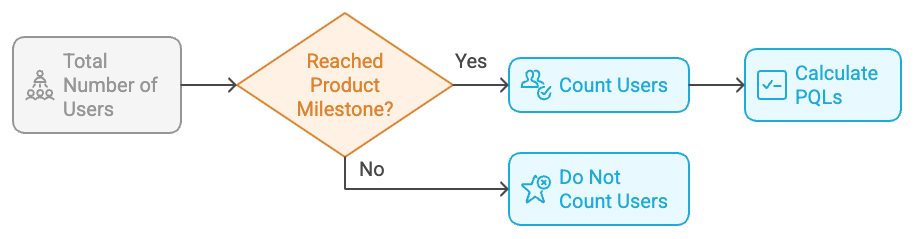
PQLs are leads who have demonstrated product usage and engagement, indicating a higher likelihood of conversion. To calculate this metric, you divide the number of users who reached a specific product milestone by the total number of users.
PQLs = Number of Users Who Reached a Specific Product Milestone / Total Number of Users
Building a Strong Brand in the SaaS Market
A strong brand is essential for any SaaS business. It helps differentiate your product from competitors, builds trust with customers, and attracts top talent. Here are some strategies for building a strong SaaS brand.
Define Your Brand Identity
Clearly articulate your company’s mission and vision to guide your brand strategy. Identify the core values that underpin your business, such as innovation, customer focus, and integrity. Develop a consistent voice and tone for your brand, ensuring that your messaging is clear, concise, and engaging.
Create a Strong Brand Story
Develop a compelling brand story that resonates with your target audience. Use storytelling techniques to bring your brand to life and connect with customers on an emotional level. Craft clear and concise brand messaging that highlights your unique value proposition.
Design a Memorable Brand Identity
Create a visually appealing logo that is easy to recognize and memorable. Choose a color palette that reflects your brand personality and evokes the desired emotions. Select fonts that are easy to read and complement your brand’s overall aesthetic.
Build a Strong Brand Reputation
Prioritize customer satisfaction and deliver exceptional support. Leverage PR to generate positive media coverage and build brand awareness. Use social media to engage with your target audience, share valuable content, and build a strong online community.
Maintain Brand Consistency
Develop comprehensive brand guidelines to ensure consistency across all marketing materials and channels. Monitor your brand reputation online and address any negative feedback promptly. Regularly conduct brand audits to identify areas for improvement and ensure brand consistency.
The Future of SaaS Marketing
The future of SaaS marketing is poised for significant transformation, driven by technological advancements, evolving customer expectations, and changing market dynamics.
AI and Machine Learning
AI-powered tools can analyze customer data to deliver highly personalized marketing messages. By predicting customer behavior, businesses can proactively address their needs and anticipate future trends. AI can also automate routine marketing tasks, freeing up marketers to focus on strategic initiatives.
Voice Search and Virtual Assistants
Creating content optimized for voice search can help businesses capture a larger share of voice search traffic. Developing voice-activated experiences can enhance customer interactions and drive engagement.
Augmented Reality (AR) and Virtual Reality (VR)
AR and VR can provide immersive product demonstrations, allowing customers to experience the product firsthand. AR and VR can be used to create interactive marketing experiences that capture attention and drive engagement.
Data Privacy and Ethical Marketing
Adhering to emerging data privacy regulations like GDPR and CCPA is crucial for legal compliance. As a bonus, transparent and ethical marketing practices can build trust with customers and enhance brand reputation.
Video Marketing
Platforms like TikTok and Instagram Reels have gained immense popularity, making short-form video content a powerful marketing tool. Similarly, live-streaming events, webinars, and product demos can foster real-time engagement with the audience.
Social Commerce
Social media platforms are increasingly becoming e-commerce platforms, enabling businesses to sell products directly to customers. Collaborating with influencers can help SaaS companies reach a wider audience and drive sales.
Elevate Your SaaS Marketing with Joseph Studios
Ready to take your SaaS marketing to the next level? Joseph Studios offers a comprehensive suite of tools and expertise to help you navigate the complex landscape of SaaS marketing. From crafting compelling content to optimizing your digital marketing campaigns, our team of experts is dedicated to driving growth and customer acquisition for your business.
Don’t miss out on the opportunity to unlock your SaaS potential. Contact Joseph Studios today to learn more about how we can help you achieve your marketing goals!

Maja has spent nearly a decade helping brands build authority, drive leads, and grow without relying on paid ads. With expertise in growth marketing, Generative Engine Optimization, technical SEO, and content-led growth, she turns smart content strategy into measurable business results.


